




What is VAT in Kazakhstan in 2026: Who Pays and How to Calculate It
Most companies in Kazakhstan that sell goods and provide services, in addition to regular taxes, must also pay Value Added Tax (VAT). This tax is applied to the difference between the purchase price and the selling price. To compensate the seller or producer’s expenses, the VAT amount is included in the final price. The collected tax goes to the state budget and is used for current public needs.
Who is a VAT payer?
The obligation to pay VAT to the state budget depends on a business’s turnover.
If annual turnover exceeds 10,000 MCI (which equals 43,250,000 KZT in 2026), VAT liabilities in Kazakhstan arise for:
Individual entrepreneurs (IEs) and partnerships.
Non-resident companies operating in Kazakhstan through branches or representative offices.
Private professionals, such as appraisers or lawyers.
Notably, 10,000 MCI in 2026 is referred to as the VAT registration threshold in Kazakhstan. This is the minimum turnover level: once exceeded, VAT registration becomes mandatory.
Онлайн-открытие счёта для бизнеса
Используйте доступные возможности
в несколько кликов

Who is exempt from VAT?
The following categories are exempt from VAT in Kazakhstan:
Businesses that sell medicines under the Mandatory Social Health Insurance (MSHI) system.
Companies providing services within the MSHI framework.
Individuals engaged in private practice.
Government institutions.
Individuals.
Taxpayers operating under a special tax regime.
What is the VAT Rate in Kazakhstan
VAT in Kazakhstan is calculated using the current rate of 16%.
This tax rate applies to all goods sold and services provided within Kazakhstan.
The 16% rate also applies to companies engaged in importing goods. In this case, VAT is not linked to turnover; instead, it is calculated based on the customs value of the imported goods.

When to register for VAT
If your business turnover exceeds the threshold, you have 10 days to submit an application to the tax authority to register for VAT. Failure to do so will result in penalties. The fine is 50 MCI (approximately 216 250 KZT). Additionally, the business will have to pay 15% of the turnover for the delay period — a significant expense that can negatively affect business operations.
Some dishonest entrepreneurs try to hide their turnover to avoid paying VAT. However, such attempts are usually unsuccessful, as the tax authorities monitor businesses whose turnover is approaching the threshold.
What happens if an entrepreneur fails to register?
In this case, they will receive a notification from the tax office. After receiving it, the entrepreneur has 30 days to register. If they fail to do so, the company's bank accounts will be blocked.
How to Register for VAT
The procedure is very simple and can be done either offline or online:
Offline: The entrepreneur fills out an application at the local office of the State Revenue Committee (OGD).
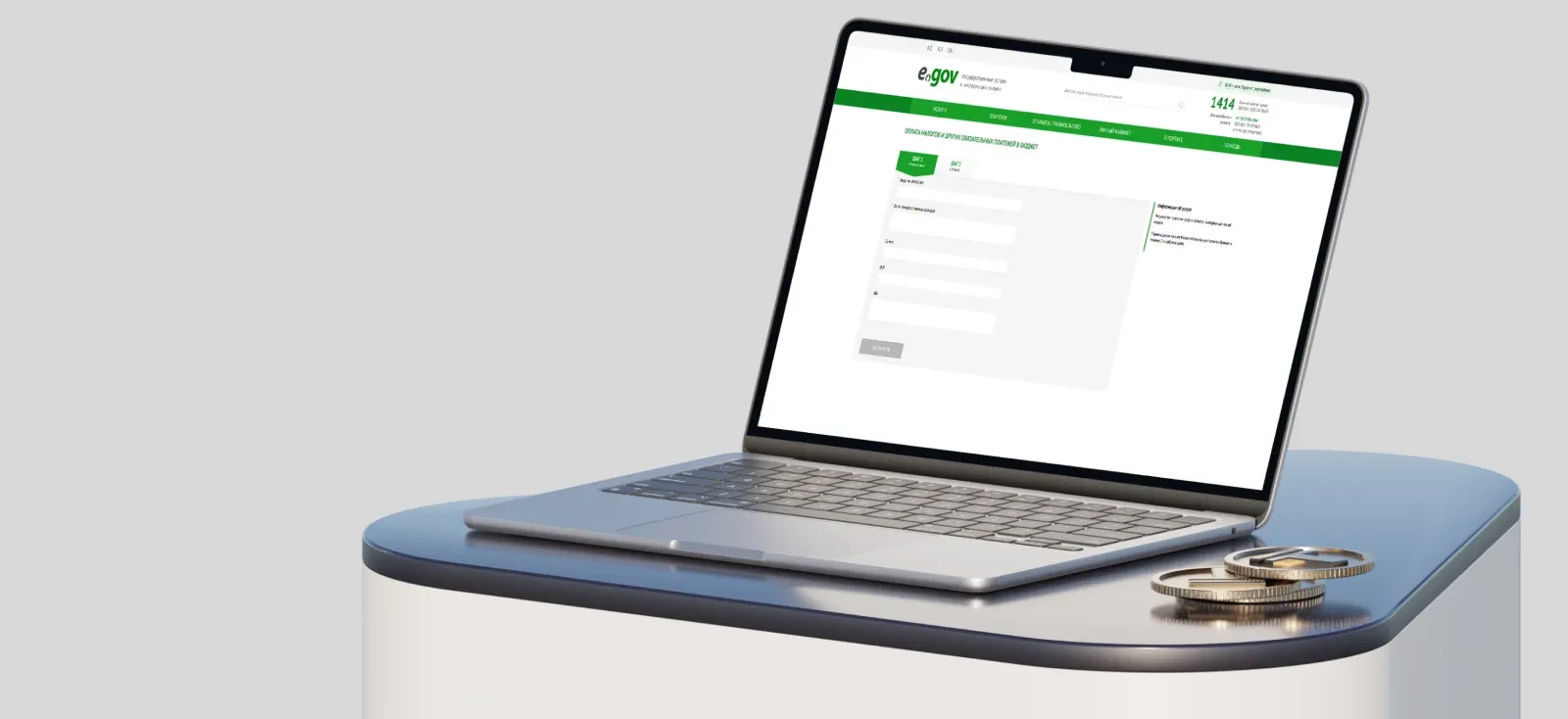
Online: An electronic application can be submitted via the government portal Egov.kz.
As a result, the entrepreneur receives a certificate of VAT registration.
VAT Payment Deadlines
VAT returns must be submitted quarterly using Form 300.00. The declaration must be filed with the tax authority by the 15th of the month following the reporting quarter. Payment of the VAT amount is due by the 25th of the same month.
How to Pay VAT
The most convenient way to pay VAT is online — it is quick, secure, and takes minimal time. Taxpayers can choose from the following options:
1. The Egov.kz portal (Electronic Government).
2. The Taxpayer’s Cabinet (online tax account).
3. The mobile app or internet banking of the bank where the business is served.
4. The e-Salyq Azamat mobile app (electronic tax wallet).
Can the Amount of VAT Be Reduced?
Some categories of taxpayers are eligible for significant tax relief — up to 70%. This benefit is available for companies engaged in the production of food products, processing of fruits and vegetables, wool, animal hides, and other specified activities.
However, in order to qualify for the VAT reduction, the business must meet two conditions:
1. The company must be a resident of Kazakhstan.
2. The business must maintain separate accounting for products that qualify for preferential tax treatment.
Регистрация ИП онлайн за 0 ₸
Начните бизнес легко
The Government of Kazakhstan aims to stimulate domestic business and is actively working to reduce the tax burden on companies. One example of this effort is the relatively low VAT rate — one of the lowest among post-Soviet countries. For instance, VAT in Russia reaches 20%, in Belarus and Armenia it is also 20%, in Azerbaijan — 18%, and in Tajikistan — 14%.
In fact, Kazakhstan’s VAT rate is considered low even by global standards: France has a VAT rate of 20%, Italy — 22%, and Spain — 21%.
This article has been translated from its original language using neural network-based translation technology.